Social media expert Chris Brogan has a post up this week reflecting on the “next media company” and the transformations of traditional media being rendered by Web 2.0. In this new world, content is no longer delivered via a one-way relationship to a passive audience, but is produced, reproduced, added to and changed by many different reader-writers. In this process, publication is merely the first step rather than the last. Signification is ever evolving and morphing, and meaning is inherently unstable and slippery, as it is in all texts. (I use the term ‘text’ here in the sense that literary theorist Roland Barthes expresses it, wherein everything that is interpreted comprises a text, not just the written word.)
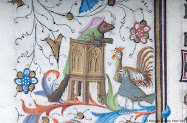
As I read Brogan’s post, I had a distinct feeling of déjà vu. It all started sounding like the process of copying, recopying, annotating, excising and interpolating that was integral to the production of medieval manuscripts. Anyone working with these texts must get to grips not only with their primary content, but with the acts of erasure, addition and change (both deliberate and inadvertent) carried out by each hand they passed through. The annotations that mark the margins of these works – both words and images – tell their own stories and serve their own ends. Each new encounter between text and reader generates new interpretations from a variety of perspectives (geographical, temporal, cultural, political and social), subtly shifting meanings or even rendering new meanings that directly conflict with the original writer’s purposes.
Take, for example, The Book of Margery Kempe. Probably written in the early 1430s, this is widely regarded as the first autobiography in vernacular English. It purports to be the story of a moderately well-off Englishwoman’s transformation from conventional wife and mother into edgy religious mystic, after a spiritual crisis sparked by the birth of her first child. Both its creation and its reception – by contemporary audiences (as reported by the author herself) and by later readers – have been the source of perennial controversy. Margery claims to be illiterate, so is the book actually the creative product of male scribes? Or are these priestly scribes a cover, which she uses to shield herself from charges of heresy or to claim a spiritual authority which was elusive for women in the Middle Ages? Is the Book a work of authentic religious mysticism? A subversive social and political commentary on Lancastrian England? Or the ravings of a woman suffering post-natal depression and ‘feminine hysteria’ because she can’t fit herself to the traditional stereotype of wife and mother? (It won’t surprise you to know that the latter interpretation has been depressingly common amongst male scholars.)
The treatment of the text itself has been integral to the many ways it has been interpreted. In 1501, the printer Wynkyn de Worde included extracts in a devotional work aimed at lay readers. Because only the least controversial passages were reproduced, religious scholars and historians who based their interpretations on this version dismissed the writer as a conventionally pious and not terribly interesting person who could certainly not be classed a mystic or spiritual leader (not least because she was a married woman and a mother, and was therefore unable to claim the state of virginity that conferred authority on other female mystics).
The Wynkyn de Worde text was the best-known account of Margery’s experience until the rediscovery of a full manuscript copy of the Book in 1934. This manuscript was originally in the possession of the Carthusian monks of Mount Grace Priory in Yorkshire, a particularly austere and spiritual house. Throughout, it is amended and annotated by several hands, of which at least two appear to be monks from the priory. Their interventions place Margery’s text into a broader framework of late medieval devotional piety and affective spiritual expression, and indicate that this deeply religious male readership regarded Margery as a genuine mystic.
In a number of cases, the second monkish commentator (early sixteenth century) interacts with and reinterprets not only the original text, but also the annotations of the first commentator (fifteenth century), effectively creating texts-within-texts. The commentators have also added their own illustrations, perhaps designed to guide interpretation by later readers. One of these is a small but detailed drawing of a tower, commonly used in medieval iconography to represent virginity. The image can be read to signify that for these monks, Margery’s own claim to be ‘a virgin in her soul’ – to have reclaimed spiritual virginity as a sign of God’s grace – was authentic and not the product of hysteria, wishful thinking or an unseemly (feminine) desire for attention.
But the added marginalia point to conflict, tension and ambiguity as well as endorsement. One commentator inserted marginal instructions for reading the text that put its chapters into a different sequence from that in the Book as originally written. He has also drawn common devotional symbols such as the (sacred) heart and the flame (of divine love) alongside passages that describe some of Margery’s more extreme and dramatic expressions of piety (which included uncontrolled crying, being struck dumb, and ‘roaring’). These drawings could be read either as signs of the commentator’s empathy with Margery’s unusual experience of the divine, or as his attempt to produce readings that filter her account through the lens of more conventional devotional practice, thus sanitising her mystical experience and shaping it to fit an accepted formula.
In the history of The Book of Margery Kempe and its many readings, we have a classic exemplar of the marginalia and annotations in medieval manuscripts – the emendations, excisions, redactions and interpolations – being as critical to producing meanings as is the central or primary text itself. The medieval reader/annotator/writer was acutely aware that manuscripts – rare and precious as they were – were communal products and their textual interpretation was an active and collaborative process rather than a matter of passive reception of fixed meanings. In this medieval ‘mash up’ of text, marginalia and images, significations were constantly being shifted, subverted, reinterpreted and recreated to fit the changing needs and expectations of diverse communities.
So all this has me wondering, is this ‘next media’ or ‘new media’ culture we're starting to engage in really so new? Or can it be seen as the evolution of very old practices that have simply been made more visible – and, it must be said, much more accessible – by a universe of new tools?
As someone whose historical research interests centre on late medieval/early modern England and France, I can sometimes feel a little isolated in my far-flung post-colonial corner of the world. But lately, I find myself constantly delighted by the many ways the web is dissolving both geographical and temporal barriers. I can access ever-growing digital collections of documents and texts dating back to the twelfth century, making it possible to undertake original research without leaving my study. And there are some beautiful sites where I can view photographic images of medieval manuscripts, invaluable because they show not just the primary content but also the marginalia and annotations that provide critical clues to the history, interpretation, dissemination and multiple purposes of a particular text. (For a quirky example, see this tale of two lions and the change of noble ownership they represent.)
And through the self-publishing miracle that is the blog, I’ve been able to make contact with some of the leading scholars in my areas of interest. I’ve participated in challenging discussions about specific historical interpretations and theoretical approaches; and I’ve debated the roles – both real and ideal – of the historical profession in contemporary society. Most recently, I’ve come across the innovative Carnivalesque project, which each month showcases a selection of recent posts on ancient, medieval and early modern history from professors, graduate students and independent scholars. Writers nominate their own or others' best posts for inclusion and hosting moves to a different blog with each edition, providing a variety of perspectives on the monthly theme. It’s not constrained by the rigorous peer review process (and glacial publishing timelines) of a traditional academic journal, but it is a credible forum where dubious scholarship or poorly supported claims will be quickly challenged by people who are experts in their fields.
There are loads of good blogs on medieval and early modern history, from the serious-minded – where posts often feature an impressive depth of detail and careful interpretation reminiscent of scholarly articles – to the hilariously light-hearted (Got Medieval and Geoffrey Chaucer Hath a Blog spring to mind). I’ll soon be adding my own favourites to this site, so you’ll be able to check them out for yourself. Nominations are also welcome, as I’d hate to think I’m missing out on any gems!
Picture credit: Crusade scene from the Hours of Pierre de Bosredont, France, ca.1465 (Pierpont Morgan Library)
Merde. Just when I thought I was getting the hang of this speaking French lark, smugly ensconced as I am in my Avancé class, I find I’ve been blithely going around calling French people fuckers. To their faces. Yes, wine glass clutched tipsily in one hand, I’ve been happily saying salut (‘cheers’) but they’ve been hearing salou (something considerably less convivial). Apparently we native English speakers, especially those of us of the antipodean variety, have a real problem perfecting the finer points of pronouncing French vowel sounds.
So to all my French friends, I can only say je suis très désolée! And I think in future I’ll stick to the pompously Anglo-Indian sounding but safe tchin.
In the meantime, here’s some more fun with badly spoken French, from Flight of the Conchords.
Sure, I think Jones has his tongue pretty firmly in his cheek when he says,
Where Geoffrey Chaucer and his fellows had the Black Death, the Peasants’ Revolt, the Hundred Years War and the Mediaeval Warm Period, so we have Swine Flu, the G20 riots, Afghanistan and Al Gore. The names have changed, but the horsemen ain’t.
But his underlying point is sound. We do seem to be in another one of those periods of general crisis – endemic war, the threat of large-scale disease, social disorder and economic chaos – that so distinctively marked the later Middle Ages throughout western Europe. People who have studied those phenomena in detail in the past, analysing the ways they inter-relate to each other and to wider social, cultural, economic and political trends, have valuable insights and theoretical frameworks to offer as we grapple with the here-and-now.
My own research interests are clustering around the intersections between 14th century constructions of gender and conceptions of legitimately and illegitimately wielded political power. So for me, watching how constructions of gender played a significant role – both overtly and covertly – in last year’s US and New Zealand elections was fascinating. Just ask, and I’ll be happy to blab away about this for hours.
P.P.S. The picture above is 'La Bête de la mer', a panel from the Apocalypse Tapestry at the Chateau d'Angers in France. The seven-headed panther-like beastie is being invested with power by the Dragon, which means the rest of us are in deep shit.
The Letters to Our Daughters project featured a thought-provoking entry this week from Dr Pamela Carmines, Professor and Director of Graduate Studies in the Department of Cellular & Integrative Physiology at the University of Nebraska College of Medicine. She raised the issue of women in academia frequently carrying heavier service commitments than their male colleagues. This reduces the amount of time they can dedicate to their own “hot science, papers and GRANTS!”, with the flow-on effect of limiting their career advancement and/or causing their professional efforts to be taken less seriously than those of male counterparts.
Both within and outside academia, women are often expected to take on more service commitments and to provide support to colleagues or junior staff, sometimes at the expense of getting ahead with their own work. I believe this is directly related to broader gender-based social pressure for women to be ‘nice’, nurturing and co-operative instead of just saying no. Even when we do say no, we often find ourselves feeling compelled to explain our decision and come up with a slew of good excuses, whereas in my experience, males will usually feel quite comfortable leaving it at a simple ‘nope, sorry, I can’t’. As someone who has an irritating propensity to say ‘yes’ and over-commit myself, this is something that concerns me when it comes to ring-fencing time to work on projects that are important to me and to advancing my career.
The other interesting point Dr Carmines raises is the existence of special women’s committees within larger professional groups and societies. Does this serve to ghettoise women and make it harder for them and their work to be taken seriously? As she asks:
Is it possible that compartmentalizing ourselves into the women's group associated with an organization might actually impede our efforts to have "equal" (or higher) status in the eyes of our male peers?
Or are women’s committees serving a necessary purpose? It's probable that without them, women would have even less influence and recognition in fields still seen as traditionally masculine, such as the 'hard sciences' and IT. And certainly, their very existence highlights the fact that such initiatives are needed because gender-based discrimination continues to be a big problem in many professional and academic settings.
The question of separation versus integration is a topic of perennial debate in the field of women’s history, too. The methods and theoretical approaches developed by historians of women and historians working from broadly feminist perspectives have revolutionised the discipline of history over the last few decades. But it also seems that the establishment of women’s history as a recognised specialty within the academy has enabled some (many?) scholars working within specialties such as political and diplomatic history to assume they don’t need to integrate women into their historical inquiries, because ‘the women’s historians do women’s history’. As a result, women – who make up over half the human race – are still invisible or appear as only token participants in many of the ‘master narratives’ of western history*.
*My own research is centred on England/western Europe, so I don’t know if this is the case elsewhere. If you’re a historian working outside that framework (or within it), what’s your experience?
These are darkening days for the female population of New Zealand. This week, the news came out that the Department of Labour’s Pay and Employment Equity Unit has been ‘disestablished’ (that’s bureaucratic weasel-speak for binned). Earlier this year, a couple of its major investigations were scrapped based on a specious argument for ‘pay restraint’ – that is to say, the government simply can’t afford to redress gender-based pay imbalances. Sadly, the move has come as no great surprise to me. The centre-right National government elected last November has been ‘reprioritising’ government spending, and using the convenient excuse of the global financial crisis to gut programmes aimed at combating discrimination and promoting social justice. It's par for the course. The last time a National government was elected, back in 1990, its first move was to repeal the Employment Equity Act.
There was an excellent and wide-ranging roundtable across several history blogs back in March, where feminist scholars discussed historian Judith M. Bennett’s book History Matters: Patriarchy and the Challenge of Feminism. Bennett specialises in the history of non-elite women in late medieval/early modern England. Her thesis in History Matters is that when a long-term perspective is applied to the historical analysis of women’s and men’s status in society (legal rights, economic conditions and so on), it becomes clear that what she terms "patriarchal equilibrium" is at work. So while conditions for women have improved over the centuries, those for men have also improved, with the result that in absolute terms, men preserve their privileged position in society. Bennett uses the example of wage rates, pointing out that the gap between what men and women earn for the same types of work hasn’t really closed much at all since the later Middle Ages. It has drifted up and down a bit, but over the long term, women have consistently earned between about 50 and 80 percent of what men earn for the same work.
So check this out: According to recent statistics reported by the Department of Labour, New Zealand women earn 78.9% of men’s average weekly earnings, and 86.7% of men’s average hourly earnings. The graph at right, from Statistics New Zealand, shows patriarchal equilibrium in action*. Over the last few years, men and women both benefited from the country’s economic boom and hourly rates have climbed, but as you can clearly see, the gap between women’s wages and men’s wages has nonetheless remained pretty constant. Now that the boom times are over, there is going to be additional pressure on women’s lower wages. At the same time, the message coming loud and clear from the National government (all naturally rolling in fat pay packets themselves) is that as a nation, pay equity is ‘a luxury we can’t afford’. With the dissolution of the Pay and Employment Equity Unit, those at the bottom of the privilege pile are once again being asked to sacrifice themselves at the altar of economic best interests.
For those of us who’ve been around the block more than a few times and who have taken to the streets in the past to protest discrimination of all kinds, the disbanding of the Pay and Employment Equity Unit feels like the first shot across the bows. I’m fully expecting to see further retroactive moves. My guess? Restricting access to abortion will soon be back on the agenda in the interests of ‘protecting family values’, while reducing the Domestic Purposes Benefit (for single parents, most of whom are women) and/or tightening the eligibility criteria will be another ideological move made in the guise of ‘reducing government spending in these tough economic times’.
I wonder what the situation is like in other countries. Are you seeing similar retrenchments being made in anti-discrimination and broadly social justice-based programmes under cover of reining in spending in a screwed economy? And for any New Zealanders reading, am I on the money here? If so, what do you think will be next in National’s firing line?
It’s Wednesday, so it must be French night. I’ve been doing lessons with the same core group of people for a couple of years now, and we’ve fine-tuned our rota for bringing the wine each week. Tonight, we were pondering the finer points of the conditionnel passé and I admit it, a glass of chardonnay down and my mind was drifting a bit. I was thinking about how when you learn a foreign language, you start to realise how much words really do construct realities and even set limits on the tangible world.
A case in point: In French, the word for ‘wife’ and ‘woman’ is the same – la femme. When you’re listening to someone talk, you have to pay close attention to context to tell which noun is intended and even then it may not be clear. It’s almost as though you can’t be a woman unless you’re a wife. I’m guessing the word itself is the product of a long history in which this was the case, with women only being defined in terms of their relationship to a man. One went from being une fille (both ‘daughter’ and ‘girl’) to being une femme. For men, the case is different. You can be un mari (husband) as well as un homme (man), or you can be the latter while not being the former.
When this difference is embedded deep in the substratum of a society, through its shared language, I can see how it becomes very difficult for women to sever the bonds that have named and defined them exclusively in terms of their relationships to men. I also suspect that the overtly gendered nature of the French language (every noun is either masculine or feminine, le or la) helps produce and reproduce what is a noticeably more gendered society. Sure, this is quite a generalisation and it’s based purely on my own limited observations, but I reckon I’m onto something. What do you think?
I’m fascinated by linguistics, semiotics and post-structural/ deconstructionist theories of language and it doesn’t surprise me that some of the biggest names in these fields were native French speakers – viz. Roland Barthes, Jacques Derrida and Michel Foucault for starters. It’s all hugely complex and intriguing, and I'm loving learning much more about it as my studies in history advance and I become immersed in theory. The freaky thing, though, is that it has completely changed the way I look at the world around me. So many things I used to simply take for granted, I am now picking apart, inverting, subverting and rejecting. What about you? Have you had any of those 'a ha' moments where the theory suddenly starts making sense in the real world and patterns become visible that you never noticed before? Share, s'il vous plait.
 Social media expert Chris Brogan has a post up this week reflecting on the “next media company” and the transformations of traditional media being rendered by Web 2.0. In this new world, content is no longer delivered via a one-way relationship to a passive audience, but is produced, reproduced, added to and changed by many different reader-writers. In this process, publication is merely the first step rather than the last. Signification is ever evolving and morphing, and meaning is inherently unstable and slippery, as it is in all texts. (I use the term ‘text’ here in the sense that literary theorist Roland Barthes expresses it, wherein everything that is interpreted comprises a text, not just the written word.)
 (early sixteenth century) interacts with and reinterprets not only the original text, but also the annotations of the first commentator (fifteenth century), effectively creating texts-within-texts. The commentators have also added their own illustrations, perhaps designed to guide interpretation by later readers. One of these is a small but detailed drawing of a tower, commonly used in medieval iconography to represent virginity. The image can be read to signify that for these monks, Margery’s own claim to be ‘a virgin in her soul’ – to have reclaimed spiritual virginity as a sign of God’s grace – was authentic and not the product of hysteria, wishful thinking or an unseemly (feminine) desire for attention.




 Posts
Posts

